

Choosing a CBD Format That Fits Modern Routines and Preferences

As wellness habits become more personalised and routine-driven, people increasingly evaluate products not only by what they contain but by how they fit into everyday life. Format has become as important as formulation. Whether the focus is supplements, functional foods such as Cannovia, or lifestyle wellness tools, the question many consumers now ask is not simply “What does this do?” but “How does this fit into my day?”
This shift helps explain why different wellness formats, liquids, capsules, edibles, topical products, and digital tools, are discussed so frequently online. The conversation is less about novelty and more about alignment with schedules, habits, and comfort levels. Understanding how people choose between formats offers insight into broader changes in modern wellness culture.
From One-Size-Fits-All to Routine-Based Choices
Historically, wellness products were marketed as universal solutions. Instructions were standardised, and little attention was paid to differences in lifestyle or preference. Today, consumers expect options that reflect how they live, work, and relax.
Busy professionals, shift workers, parents, and remote workers all experience time differently. A format that requires preparation or precise timing may be unsuitable for someone with an unpredictable schedule, while another person may prefer ritual and routine. Format choice becomes a practical decision shaped by daily rhythms rather than abstract benefit claims.
This move toward routine compatibility mirrors trends seen in fitness, nutrition, and mental health practices.
Convenience as a Defining Factor
Convenience is often misunderstood as laziness, but in modern wellness it functions more as a sustainability tool. Habits that are easy to maintain are more likely to persist over time. When people abandon wellness routines, it is often due to friction rather than dissatisfaction.
Formats that integrate smoothly into existing habits, morning routines, evening wind-downs, or workday breaks, reduce cognitive load. The fewer decisions required to maintain a habit, the more likely it is to endure.
This principle applies broadly across wellness categories and helps explain why discussions about format dominate consumer conversations.
Sensory Experience and Comfort
Another factor influencing format preference is sensory experience. Taste, texture, smell, and method of use all affect whether a product feels comfortable or intrusive. Some people prefer neutral, unobtrusive options, while others enjoy formats that feel indulgent or ritualistic.
These preferences are highly individual and culturally influenced. What feels natural in one context may feel awkward in another. Format choice allows people to align wellness practices with personal comfort rather than forcing adaptation.
In this way, format becomes a mediator between intention and execution.
Discretion and Social Context
Modern routines often unfold in shared or public spaces, offices, public transport, co-working environments, or family homes. As a result, discretion matters. Some formats are easier to use privately or inconspicuously, which can influence adoption.
This consideration is less about secrecy and more about social ease. Wellness habits that draw attention may feel disruptive or uncomfortable in certain settings. Choosing a format that aligns with social context allows people to maintain routines without friction or self-consciousness.
The importance of discretion reflects how wellness has moved from private spaces into everyday environments.
Information, Perception, and Trust
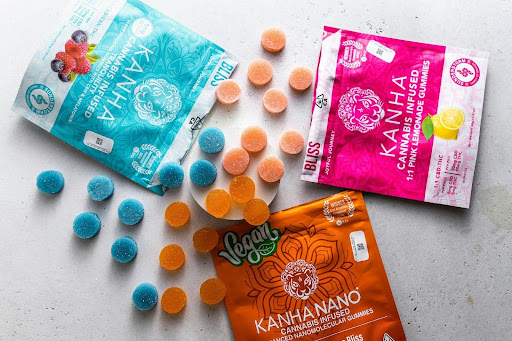
Format also shapes how products are perceived. Liquids may be associated with immediacy, capsules with precision, and edible formats with approachability. These associations are not always evidence-based, but they influence trust and expectation.
Consumers often rely on heuristics, mental shortcuts, when evaluating unfamiliar wellness options. Format becomes a signal that helps people decide whether something feels intuitive, manageable, or credible.
According to research discussed by the National Institutes of Health, consumer perception plays a significant role in adherence to wellness routines, sometimes independent of measurable outcomes. This highlights the importance of psychological alignment alongside functional considerations.
Flexibility Versus Structure
Some people thrive on structure. They prefer formats that are measured, scheduled, and clearly defined. Others value flexibility and adaptability, choosing options that allow variation without strict rules.
Format choice often reflects this orientation. Structured formats support consistency and tracking, while flexible formats accommodate changing circumstances. Neither approach is inherently superior; effectiveness depends on alignment with personal habits and temperament.
The growing availability of multiple formats acknowledges this diversity rather than prescribing a single “correct” method.
Digital Influence on Format Awareness
Social platforms play a significant role in how format preferences are shaped. Short-form content allows people to see how others incorporate wellness into daily life, making abstract choices concrete.
Seeing a routine demonstrated visually can normalise certain formats and demystify others. At the same time, this visibility can oversimplify complex considerations, favouring ease and aesthetics over deeper evaluation.
Nevertheless, social exposure accelerates awareness of options and encourages experimentation based on lived examples rather than theoretical descriptions.
Wellness as a Long-Term Practice
As wellness culture matures, there is growing recognition that long-term sustainability matters more than short-term enthusiasm. Format choice becomes part of this conversation. Products that fit naturally into life are more likely to support consistent engagement.
This perspective reframes wellness from intervention to integration. The goal is not to overhaul routines, but to support them subtly and sustainably.
Format, in this sense, is not a superficial detail but a structural element of habit formation.
Avoiding Overgeneralization
It is important to note that no format universally suits all people or situations. Preferences evolve, routines change, and needs shift over time. What works during one life phase may feel unsuitable in another.
Acknowledging this variability encourages a more flexible approach to wellness decision-making, one that allows adjustment without framing change as failure.
This adaptability is increasingly central to modern wellness narratives.
Format as a Reflection of Lifestyle
Choosing a wellness format is ultimately a decision about how a practice fits into real life. It reflects priorities around time, comfort, discretion, and identity. As wellness becomes more personalised and less prescriptive, format choice serves as a bridge between intention and habit.
Rather than signalling effectiveness on its own, format reveals how people navigate modern routines and negotiate space for wellbeing within them. In that sense, the rise of format-focused discussion is not a distraction from substance, it is a recognition that how something is used often determines whether it is used at all.
In a landscape where wellness options continue to expand, the most enduring choices are likely to be those that respect not just what people want to achieve, but how they actually live.
Liora Skye, founder of Magazinevalve, is a certified SEO professional and skilled writer with over 5.5 years of experience. She specializes in creating authentic, engaging, and well-researched celebrity blogs that connect with readers worldwide


