

Why a Leather Cooking Apron Is Worth Every Penny

Most people do not think twice about their kitchen apron until it lets them down. A grease splatter soaks straight through, a stain sets permanently after the first wash, or the ties come undone mid-cook and end up trailing near the stove. These are not minor inconveniences. They are signs that the apron you are using was not built for serious kitchen use. A seasoned leather cooking apron made from full-grain cowhide solves all of these problems at once and does it without needing to be replaced every season.
The Problem with Fabric Aprons in a Real Kitchen
Cotton and polyester aprons are the default choice for most home cooks because they are cheap and easy to find. For light kitchen tasks they work well enough. But in a kitchen where you are cooking seriously, dealing with splattering oils, heavy sauces, and high heat on a regular basis, fabric falls short in ways that become obvious quickly.
Grease soaks straight through cotton rather than staying on the surface. Stains from tomato-based sauces, turmeric, and oils are set permanently and do not wash out. The material thins and tears along seam lines with repeated washing and heavy use. Within a season of regular cooking, most fabric aprons look worn out and need replacing.
Full-grain leather does not have any of these problems. It repels grease and moisture from the surface rather than absorbing them. A wipe with a dry cloth after cooking removes most residue without any effort. It does not stain permanently, does not fray, and holds its shape through years of regular use. It also gets better looking over time, developing a rich patina that fabric simply cannot replicate.
What to Look for When Buying a Leather Cooking Apron
The leather apron market has a wide quality range and the differences between a good one and a mediocre one are not always obvious from a product photo or a description. Here is what actually matters:
Leather Grade
Always check the leather grade before buying. Full-grain leather is the densest and most durable option, retaining the full natural strength of the hide. Top-grain is a solid second choice. Bonded leather, which is made from compressed scraps and coated to look like the real thing, cracks and peels within months of regular use. It is worth avoiding entirely regardless of the price.
Strap Design
Cross-back straps distribute the weight of the apron evenly across both shoulders rather than concentrating it at the neck. For anyone spending extended time in the kitchen, this makes a noticeable difference in comfort over a long cooking session.
Pocket Depth and Layout
A well-designed kitchen apron keeps your most-used tools within arm’s reach at all times. Deep front pockets for a kitchen cloth, thermometer, tasting spoon, and small utensils eliminate unnecessary trips away from the stove mid-cook.
Hardware Quality
Look for solid brass or stainless steel buckles and rings. These resist corrosion from kitchen steam and cleaning products. Cheap zinc alloy or plastic fittings corrode quickly and cause the apron to lose its adjustment over time.
How to Keep a Leather Cooking Apron in Great Shape
One of the biggest advantages leather has over fabric is how straightforward it is to maintain with a simple routine. After each cooking session, wipe the apron down with a dry cloth while it is still warm. This lifts surface grease before it has a chance to set.
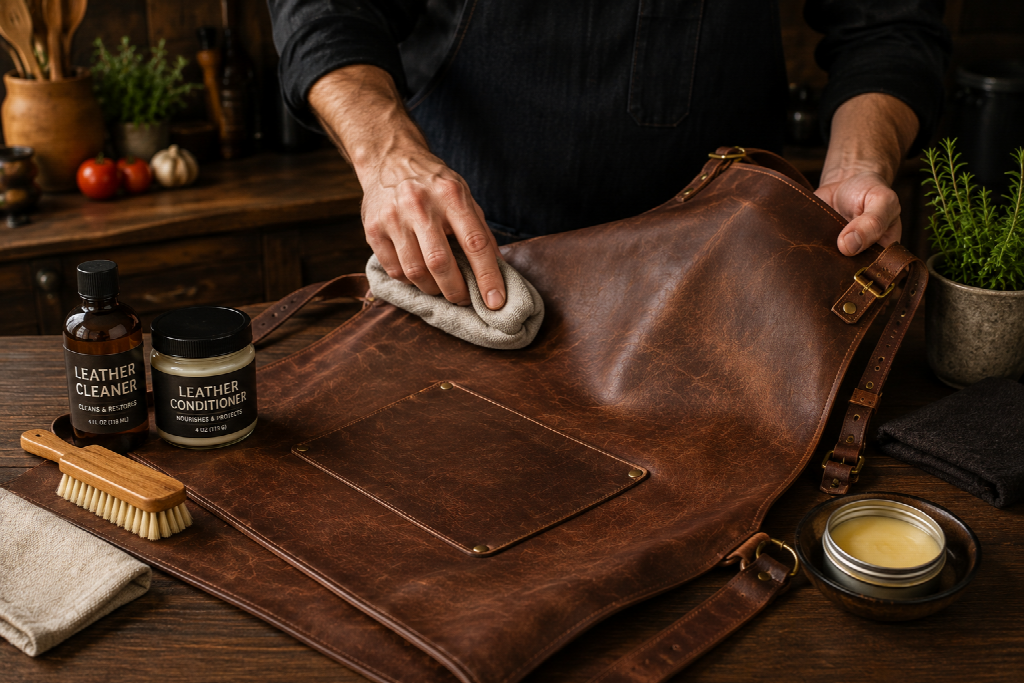
For tougher grease spots, sprinkle cornstarch directly on the stain and leave it for 20 to 30 minutes. It draws the oil out naturally. Then brush it off gently with a soft cloth. Every month or two, apply a small amount of beeswax or lanolin-based conditioner across the full surface, let it absorb for 15 minutes, and buff off the excess.
Three things to always avoid: putting it in the washing machine, drying it with direct heat, and folding it for storage. Always hang it flat and allow it to air dry completely between uses.
Finding the Right Brand to Buy From
Not all leather apron brands are worth buying from. General homeware retailers often carry bonded leather options at prices that look competitive until the material fails within a few months of use. The better approach is to buy from a brand that specializes in leather workwear rather than one that treats aprons as a side category.
Specialist brands use better leather grades, pay more attention to stitching reinforcement, and select hardware for durability rather than cost reduction. For anyone looking to explore a range of styles covering cooking, grilling, and professional kitchen use, robust leather aprons from specialist brands with cross-back straps, deep pockets, and solid metal hardware are the standard worth looking for.
The Bottom Line
A leather cooking apron is one of those kitchen upgrades that pays for itself quickly. The upfront cost is higher than a fabric alternative, but when you factor in the durability, the low maintenance, and the fact that it does not need replacing every year, it is the more economical choice over any meaningful timeframe. Buy a good one, take care of it, and it will be part of your kitchen for years to come.
Liora Skye, founder of Magazinevalve, is a certified SEO professional and skilled writer with over 5.5 years of experience. She specializes in creating authentic, engaging, and well-researched celebrity blogs that connect with readers worldwide


