

What a Live Sports Payment Actually Buys

A monthly sports subscription, a pay-per-view purchase, and a weekend pass can all put a match on your screen, but each covers a different viewing arrangement. A sports wager is another transaction altogether. Before comparing the prices, identify what each charge covers, how long it lasts, and whether another payment is required. Otherwise, the apparent price of watching a game can mix together a subscription, an event purchase, and an optional bet that has nothing to do with obtaining the broadcast.
A change in UFC coverage illustrates how the purchase itself can change. In August 2025, Paramount announced a US agreement beginning in 2026 that would replace UFC’s existing pay-per-view model with coverage through Paramount+, alongside selected CBS simulcasts. The agreement included numbered events and Fight Nights, with no additional pay-per-view charge for Paramount+ subscribers. For Paramount+ viewers, removing the event surcharge does not remove the subscription charge. The distinction is between paying separately for a broadcast and having that broadcast included in an existing package.
Watching and wagering are separate purchases
A wager concerns a sporting outcome, rather than a period of television access. For a sports bet through Lucky Rebel, the selection and stake describe what the bettor has backed and the amount committed. Those details answer a different question from which subscription carries the match. The bet is settled according to its terms, while the viewing purchase concerns permission to watch the coverage.
The distinction holds whether someone watches the contest, follows the score, or misses the event. A subscription charge does not depend on backing a particular result, and a stake is not an admission fee for the broadcast. When describing the cost of watching, count the payments required to receive the coverage. Keep any wagering activity separate, even when both transactions concern the same match.
Check what the viewing offer includes
A subscription is defined by its package and access period. It may contain several channels or a selection of events, so the relevant question is whether the particular broadcast belongs to that package. A service carrying a sport does not, by itself, establish that every game is included.
Coverage can change while the payment format stays the same. Adding an event to a subscription changes the coverage included in the recurring fee. Comparing only the old and new monthly prices would miss the change in what that fee includes. Keep the content and access period alongside the price when comparing offers or checking costs across different years.
Pay-per-view identifies an event purchase. It does not automatically tell you whether a separate subscription is required, whether earlier fights on the card are included, or how long a replay remains available. Those are details of the individual offer. The event name and headline price alone cannot settle them.
The comparison has three parts: the content being purchased, the duration of access, and the total required payment. Monthly and annual subscriptions can cover different periods, even when a price comparison displays both as monthly amounts. An event purchase can be narrow in scope without being comparable to a day of channel access.
Renewal is a separate detail. The date access ends and the date another payment becomes due need to be clear before treating a subscription as a one-off purchase. For a single match, the relevant total includes any required underlying package, as well as the event charge.
A monthly equivalent is not a monthly bill
The methodology accompanying the Sports Streaming Inflation Calculator compares selected subscription prices from 2021 and 2026, converting annual or seasonal charges into monthly equivalents. That puts differently priced packages onto a common time basis for comparison.
For an annual subscription, dividing the annual charge by 12 produces an average monthly cost. The annual amount may still be due upfront. A seasonal package also needs its comparison period identified: spreading its price across a calendar year answers a different question from spreading it across the months of the season.
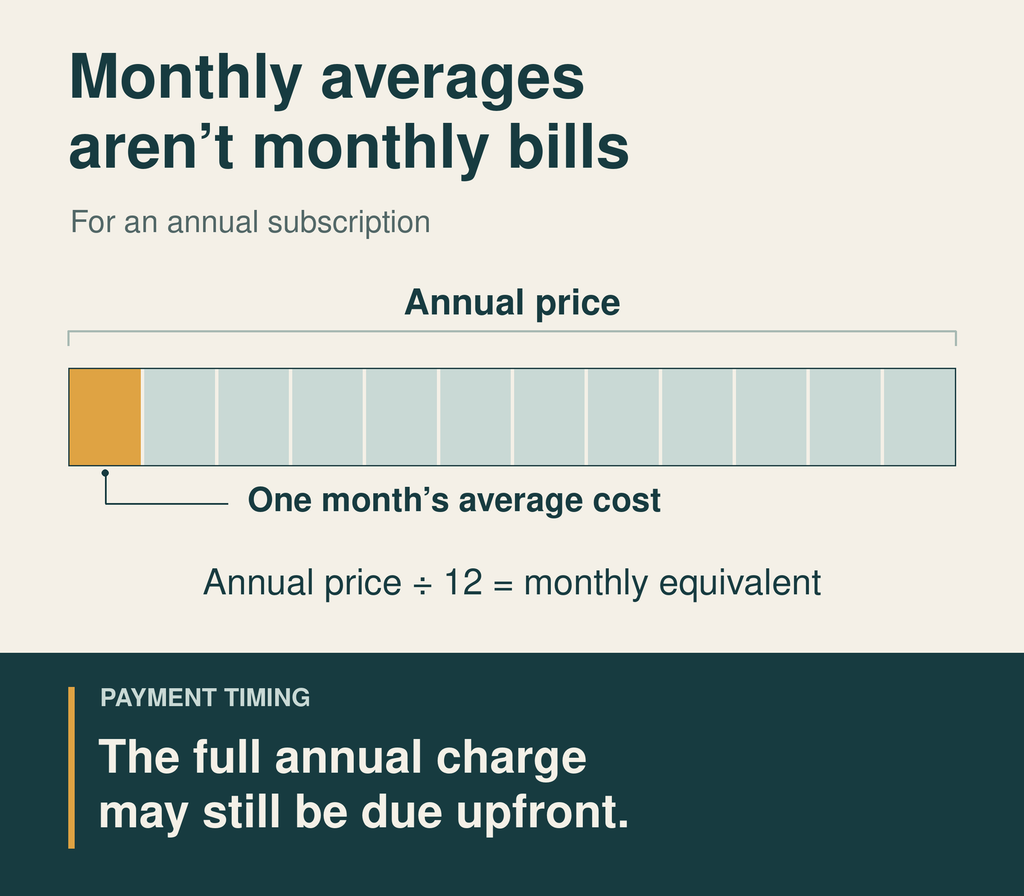
Keep the original charge and its billing period beside any converted figure. That preserves the difference between a useful average and the amount needed to make the purchase. A lower monthly equivalent does not, on its own, establish a lower commitment for someone interested in just one event.
Short passes still have boundaries
Time-limited passes provide another way to buy viewing access. Sling’s August 2025 announcement described its new day, weekend, and week passes with different access windows: 24 hours, Friday through Sunday, and seven days, respectively. The launch coverage also noted that broadcast stations were excluded.
The day and weekend descriptions use different kinds of time windows. The day pass specified 24 hours of immediate access; the weekend version named calendar days. Check the start and expiration times against the broadcast schedule, rather than treating those labels as interchangeable. Replay availability is another detail to confirm before relying on a pass to watch later.
Start with the broadcast you want, then establish the package, access dates, and payment required to receive it. Only then compare prices. A monthly average, an event charge, and a short pass become useful numbers once each is attached to the coverage and commitment it actually represents.
Liora Skye, founder of Magazinevalve, is a certified SEO professional and skilled writer with over 5.5 years of experience. She specializes in creating authentic, engaging, and well-researched celebrity blogs that connect with readers worldwide


