

Time vs Effort: How Beauty Routines Are Becoming More Efficient

For years, beauty routines were often defined by effort. Multiple steps, carefully layered products, and time-intensive techniques were seen as part of the process. The more time invested, the better the result was assumed to be.
That assumption is changing.
Today, the focus is shifting from how much effort a routine requires to how effectively it delivers results. Efficiency, not excess, is becoming the new standard. People are no longer asking how much they can add to their routine, but how much they can simplify without compromising how they look and feel.
The Shift Toward Practical Beauty
Modern lifestyles leave less room for unnecessary complexity.
Busy schedules, constant movement, and competing priorities have reshaped how people approach daily routines. Beauty is no longer treated as a separate activity that requires dedicated time, it is being integrated into everyday life.
This shift has led to a more practical mindset. Instead of layering multiple products each morning, people are choosing solutions that reduce the need for repetition. Instead of starting from scratch every day, they are building routines that carry over. The goal is not to do less for the sake of it. It is to do what works, more efficiently.
Rethinking the Role of Time
Time has become one of the most valuable factors in decision-making.
A routine that takes 45 minutes may produce a polished result, but if it cannot be maintained consistently, its value is limited. On the other hand, a routine that takes 10 minutes and delivers a reliable outcome becomes far more sustainable.
This is where the concept of efficiency becomes important.
Efficiency is not about rushing. It is about removing unnecessary steps while preserving the outcome. It is about recognising which parts of a routine actually make a difference, and which do not.
The Rise of Semi-Permanent Solutions
One of the most noticeable developments in this shift is the growing popularity of semi-permanent beauty treatments.
These solutions are designed to reduce daily effort by extending the lifespan of certain results. Instead of repeating the same steps every day, individuals can rely on longer-lasting enhancements that maintain consistency over time.
Lash extensions are a clear example.
They eliminate the need for daily mascara, reduce time spent on eye makeup, and create a more defined look with minimal ongoing effort. But as with any semi-permanent option, understanding longevity becomes an important part of the decision.
Questions such as how long do semi permanent lashes typically last are no longer just technical, they are practical. They reflect a broader shift toward evaluating beauty choices based on how well they fit into everyday routines, not just how they look immediately after application.
Effort vs Maintenance
Efficiency does not eliminate effort entirely, it redistributes it.
Instead of daily repetition, effort is concentrated into fewer, more intentional actions. A treatment may require an initial investment of time, followed by minimal maintenance. This structure allows for consistency without constant input.
The result is a different kind of routine. One that is built around maintenance rather than repetition. Around sustainability rather than intensity.
What Skin Health Guidance Suggests
As routines become more streamlined, skin health remains a central consideration.
According to the American Academy of Dermatology, consistent, well-structured skincare routines are more effective than overly complex or frequently changing ones. Introducing too many products or making constant adjustments can increase the risk of irritation and reduce overall effectiveness.
This reinforces an important principle. More is not always better. In many cases, simplicity supports better outcomes.
Reducing Decision Fatigue
Another benefit of efficient routines is the reduction of decision fatigue. Every step in a routine requires a choice. What product to use, how to apply it, whether to adjust it. Over time, these decisions accumulate, creating unnecessary cognitive load.
By simplifying routines, many of these decisions are removed. The process becomes more automatic. Fewer variables mean fewer opportunities for inconsistency. This creates a sense of stability, where the outcome becomes more predictable.
Consistency Over Perfection
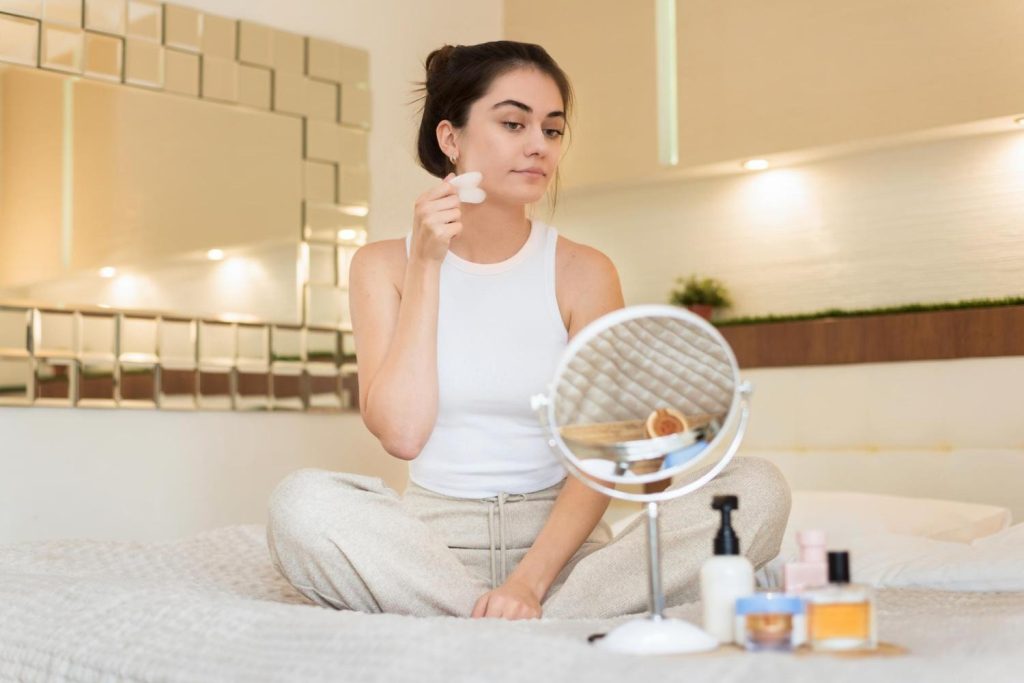
One of the most significant advantages of efficiency is consistency.
Highly detailed routines can produce excellent results, but only if they are followed consistently. When they become difficult to maintain, results vary.
Simplified routines, on the other hand, are easier to sustain. They may not aim for perfection in every step, but they deliver reliable outcomes over time. And in most cases, consistency has a greater impact than occasional precision.
The Emotional Aspect of Effortless Beauty
There is also a psychological shift taking place.
Beauty is becoming less about effort and more about ease. The idea of looking put together without investing significant time is increasingly appealing. It creates a sense of control without adding pressure. This does not mean that effort disappears.
It means that effort becomes more intentional. People are choosing where to invest their time, rather than distributing it across multiple steps. They are focusing on what has the greatest impact, and letting go of what does not.
A More Sustainable Approach
Efficiency also aligns with a broader movement toward sustainability.
Using fewer products, reducing waste, and avoiding unnecessary consumption all contribute to a more mindful approach. When routines are simplified, they tend to require fewer resources, both in terms of time and materials.
This creates a balance. A routine that is not only easier to maintain, but also more aligned with long-term habits.
Where Time and Effort Meet
The relationship between time and effort is not fixed.
Spending more time does not always lead to better results. Applying more effort does not always create greater impact. What matters is how both are used. Efficient beauty routines recognise this balance.
They focus on outcomes that can be maintained, not just achieved. They prioritise clarity over complexity. And they reflect a broader shift toward routines that support everyday life, rather than complicate it. In the end, the goal is not to reduce beauty to the simplest possible form. It is to make it work, consistently, effectively, and with just the right amount of effort.
Liora Skye, founder of Magazinevalve, is a certified SEO professional and skilled writer with over 5.5 years of experience. She specializes in creating authentic, engaging, and well-researched celebrity blogs that connect with readers worldwide


