

Operational Mistakes New Businesses Make With Inventory and Space

For many new businesses, early operational decisions are shaped by urgency rather than experience. Founders focus on product development, customer acquisition, and cash flow, often treating inventory and space management as secondary concerns. Yet it is precisely in these areas that small, early mistakes can compound into long-term inefficiencies.
Inventory and space are not neutral background factors. They affect working capital, workflow, risk exposure, and even customer experience. When mismanaged, they quietly drain time and resources at stages when businesses can least afford it.
Guidance on how to use self storage for business has become more visible in recent years because many startups encounter the same operational pitfalls. Understanding those mistakes, and why they occur, can help new businesses build more resilient systems from the start.
Treating Inventory as a Static Asset
One of the most common mistakes is assuming inventory is static. New businesses often calculate how much space they need based on current stock levels, without accounting for fluctuations in demand, seasonality, or supplier constraints.
In reality, inventory is dynamic. Quantities rise and fall, product mixes change, and packaging requirements evolve. When space planning does not accommodate this variability, businesses end up stacking goods inefficiently, damaging products, or losing track of what they actually have on hand.
Static thinking leads to reactive decisions rather than proactive systems.
Overcommitting to Fixed Space Too Early
Another frequent error is committing to long-term commercial space before operational needs are clear. New businesses may lease storage rooms, warehouses, or offices based on optimistic growth projections or perceived professionalism, only to discover that the space is underused or poorly suited to actual workflows.
Fixed leases lock businesses into costs that do not scale down during slower periods. They also reduce flexibility when product lines change or operations pivot. Early-stage businesses often benefit more from variable space arrangements that can expand or contract alongside inventory levels. The issue is not ambition, but timing.
Mixing Operational and Personal Storage
In the early stages, founders often store business inventory alongside personal belongings, in spare rooms, garages, or shared spaces. While this may seem efficient initially, it quickly introduces operational risk.
Personal environments are not designed for commercial storage. Items may be exposed to temperature changes, moisture, or accidental damage. More importantly, mixing personal and business assets blurs boundaries, making tracking, auditing, and insurance coverage more complex.
This lack of separation can create confusion during scaling, compliance checks, or disputes.
Poor Accessibility and Workflow Design
New businesses frequently prioritise storing items cheaply rather than storing them accessibly. Inventory may be placed wherever space is available, without considering how often items need to be retrieved, packed, or rotated.
Over time, this leads to inefficient workflows. Staff spend unnecessary time moving items, unpacking boxes, or working around poorly placed stock. In fast-moving operations, these inefficiencies add up quickly.
Good space management considers not just where items go, but how they move.
Underestimating Risk and Damage
Inventory damage is often treated as unavoidable loss rather than a preventable outcome. New businesses may underestimate how improper stacking, lack of protective materials, or exposure to unsuitable environments can degrade products.
Damage is not only a financial issue; it affects fulfilment timelines, customer satisfaction, and brand reputation. When replacement stock is unavailable or delayed, operational strain increases.
Preventative storage decisions are usually far less costly than reactive fixes.
Lack of Inventory Visibility
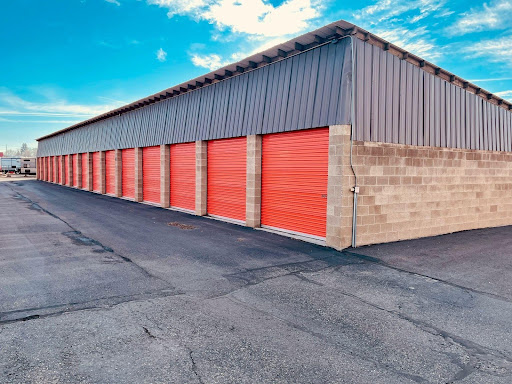
Another structural mistake is poor visibility. Without clear organisation, labelling, and categorisation, businesses lose track of what they have and where it is stored. This leads to over-ordering, stockouts, and inaccurate forecasting.
Visibility issues are often framed as software problems, but they are just as much physical problems. Even the best inventory management system fails if the physical layout does not support accurate counting and retrieval.
Space design and data accuracy are tightly linked.
Scaling Without Redesigning Systems
As businesses grow, inventory systems that worked at a small scale often break down. New businesses sometimes respond by adding more space rather than redesigning storage logic. This can temporarily relieve pressure while masking deeper inefficiencies.
Scaling requires rethinking how items are categorised, accessed, and protected. Simply expanding storage without improving structure can amplify existing problems rather than solve them.
Growth without redesign leads to fragility. Service-heavy businesses see the same pattern: restaurants that add locations or hours without fixing phone coverage lose orders in the rush; voice AI such as Kea AI takes calls and sends orders to the POS (Toast, Square, Clover, Olo)
Cost Blind Spots in Space Decisions
Storage costs are often evaluated narrowly, focusing on rent alone. New businesses may overlook indirect costs such as time spent managing clutter, replacing damaged goods, or reorganising poorly planned layouts.
When space decisions create inefficiencies, those costs show up elsewhere, in labour, delays, and lost opportunities. Evaluating space purely by price per square metre misses its operational impact.
Cost-effective storage is not always the cheapest option.
Evidence From Business Operations Research
Operational research consistently shows that early infrastructure decisions have outsized effects on long-term efficiency. Studies cited by the Harvard Business Review note that young companies that invest early in adaptable operational systems tend to scale more smoothly and incur fewer corrective costs later.
Inventory and space management are core components of that infrastructure. When treated as strategic systems rather than temporary fixes, they support flexibility and resilience.
Rethinking Storage as an Operational Tool
For new businesses, storage should be viewed as an operational tool rather than a passive container. It shapes workflows, protects assets, and influences how easily a business can respond to change.
Avoiding common mistakes requires stepping back from immediate pressure and asking how inventory will move, grow, and change over time. Flexible, well-organised storage systems support that evolution rather than constrain it.
In early-stage operations, the difference between chaos and control often comes down to how thoughtfully space is used. Getting that right early does not guarantee success, but getting it wrong almost always creates friction that slows everything else down.
Liora Skye, founder of Magazinevalve, is a certified SEO professional and skilled writer with over 5.5 years of experience. She specializes in creating authentic, engaging, and well-researched celebrity blogs that connect with readers worldwide


