

How to stop cat litter from getting everywhere

Litter gets everywhere for a simple reason — cats are tiny excavators with fur coats. They dig, they pivot, they launch out of the box like they’re late for a meeting, and whatever sticks to paws or belly fur becomes confetti across your hallway.
If you’re here because you’re tired of sweeping the same gritty trail every day, start with the one lever that actually changes the whole situation: the litter itself. A lower-dust, heavier-granule, fast-clumping option can reduce what ends up on paws in the first place. That’s the logic behind guides like how to stop cat litter from getting everywhere — the goal isn’t perfection, it’s making the mess small enough that it stops running your life.
The good news is you don’t need a complicated setup. You need a few small changes that work together, because litter tracking is usually a “death by a thousand papercuts” problem.
The real reasons litter travels
Most people blame the cat. Sometimes it’s the box. Often it’s the granules.
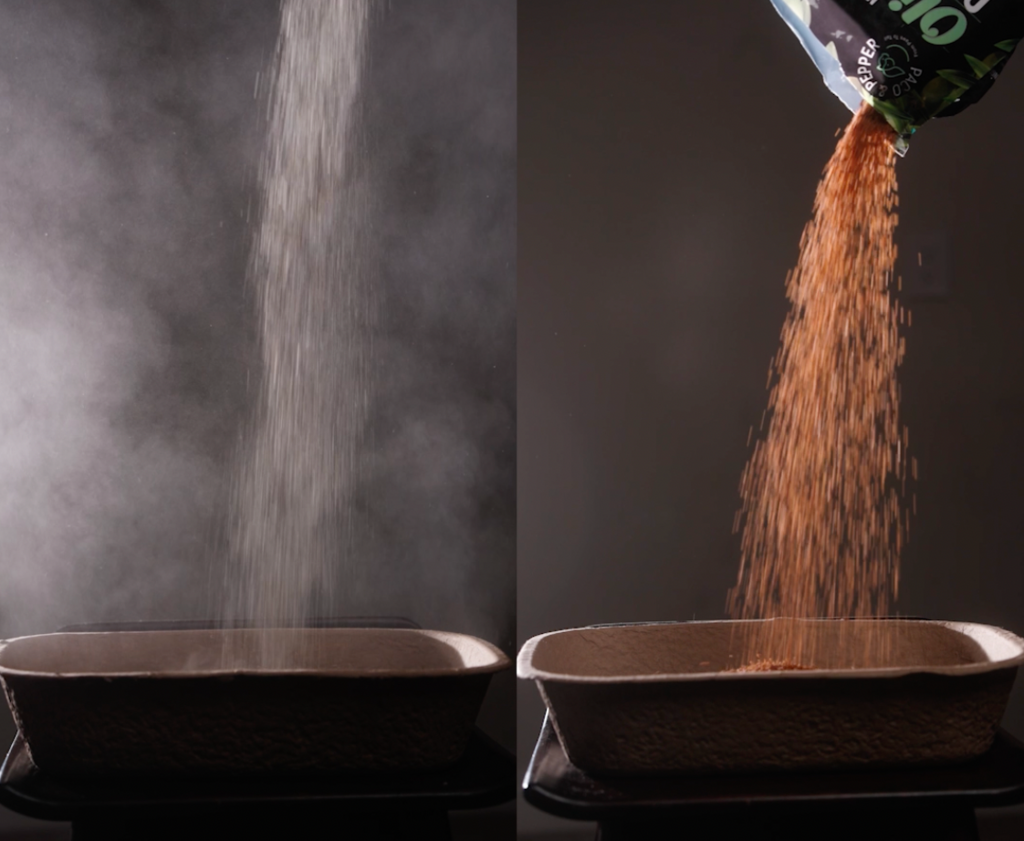
Very fine, sandy litter tends to cling — to paw pads, to the fur between toes, to long hair around the back legs. Some of it turns to powder after it gets wet, which makes it even easier to spread. Once those particles are lightweight, they don’t just fall near the box — they migrate, especially if you have rugs, runners, or a forced-air system that moves dust around.
Dust also isn’t just a cleaning issue. There are published case reports linking heavy exposure to certain litter dust (including bentonite-based products) with respiratory problems in humans, with improvement after removing the exposure. That doesn’t mean every dusty litter is “dangerous,” but it does explain why many cat owners become obsessed with finding something that doesn’t cloud up the room every time their cat digs.
Start with the exit path, not the box
Here’s a quick mental picture: the box is a sandbox, and the “tracking zone” is the few seconds after your cat leaves it.
If your cat steps out, takes one step onto a smooth floor, and then accelerates — those first two paw-prints become a trail. If, instead, your cat steps onto a textured surface that grabs particles, most of the mess ends right there.
That’s why a good mat matters more than people think. Look for a surface that’s slightly grippy or layered, not a flat rubber sheet. The flat ones wipe nicely but they don’t trap much. The best mats act like a shallow maze — litter drops in and stays there until you shake it out.
Place the mat so your cat has to cross it. That sounds obvious, but many mats sit beside the box like decor. Put it directly in the exit line.
Choose a box style that matches your cat’s habits
Different cats create different messes:
- Some dig like they’re prospecting for gold.
- Some pee high.
- Some politely step in and out and still manage to spread litter because their fur holds onto it.
Instead of buying the “fanciest” box, match the design to the behavior:
A top-entry box can cut tracking because the jump-out knocks litter off paws back into the box.
High-sided boxes help for cats that kick litter out the front.
Covered boxes can contain scatter — but they can also trap odor if you don’t scoop often, and some cats dislike enclosed spaces. If your cat has ever protested a change in box setup, go slow.
One detail people miss: the box should be big enough for a full turn. When it’s cramped, cats bump the sides, step in the wrong spots, and fling more granules out during the awkward exit.
The litter that reduces tracking is usually the litter that stays together
You don’t win this fight by making granules “stick” to your cat less — you win by making waste bind quickly, so the box stays cleaner between scoops and paws touch fewer loose particles.
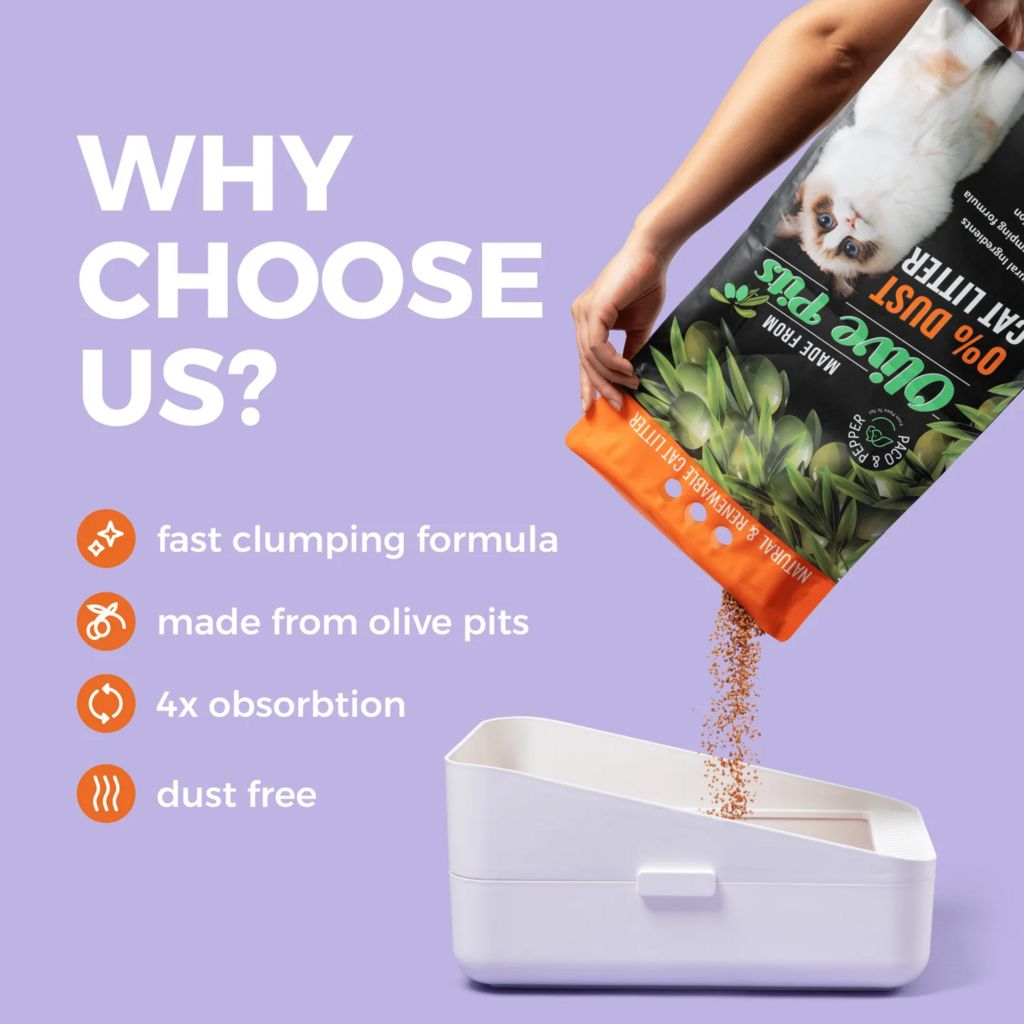
That’s why fast clumping matters. A litter that forms tight clumps quickly is less likely to smear into fine residue that then becomes dust or paste on paws.
Some newer plant-based formulas lean into this by using natural binders (you’ll often see ingredients like guar gum in clumping products). Retail listings for olive-pit based litter commonly describe it as “dust-free” and “clumping,” which is exactly the combo you want for a cleaner perimeter.
And the “dust-free” claim isn’t just marketing fluff in the way people fear. In at least one widely discussed thread, cat owners specifically called out that the “no dust” promise was true in real life use, which is the kind of plain-language feedback that’s hard to fake.
Placement matters more than aesthetics
If your litter box sits right next to the most trafficked hallway in your home, you’ve created a conveyor belt.
A small shift can make a big difference: move the box to a lower-traffic corner where your cat naturally slows down after exiting. Even a few feet can help, because the first “launch” step is where the most litter comes off.
If you have multiple cats, the temptation is to cluster boxes together in one “litter area.” That’s fine — but it needs enough space so one cat isn’t forced to sprint past another, kicking up extra litter and stress. Crowding creates speed. Speed creates scatter.
The boring routine that keeps the floor clean
This part is unsexy, but it’s real: if you scoop once a day, the box stays drier, the surface stays more consistent, and you get fewer half-crumbled clumps that turn into paw paste.
A simple rhythm works:
- Scoop regularly so clumps don’t break apart under paws.
- Top up the litter depth so waste doesn’t hit the bottom and smear.
- Fully dump and wash the box on a schedule that matches your household — not when it becomes unbearable.
If you’ve ever noticed tracking suddenly got worse “for no reason,” it’s often because the litter level got too low, or the bottom layer turned into fine crumbs.
If you want fewer messes, think “material science,” not “cat training”
You can trim paw fur if you have a long-haired cat.
You can wipe paws, if your cat tolerates it.
You can vacuum daily.
But the biggest wins come from reducing what can travel in the first place: low dust, low crumble, good clumping, and an exit setup that catches particles before they spread.
Once you get those fundamentals right, everything else becomes optional rather than desperate.If you want to see how olive-pit litter is positioned as a practical solution to tracking and dust — and how to transition without stressing your cat — start here at Paco & Pepper
Liora Skye, founder of Magazinevalve, is a certified SEO professional and skilled writer with over 5.5 years of experience. She specializes in creating authentic, engaging, and well-researched celebrity blogs that connect with readers worldwide


